-
-
We are always in touch
-
231, Bitarap Turkmenistan Avenue
Oguzkent Residence, 106
Oguzkent Residence, 106
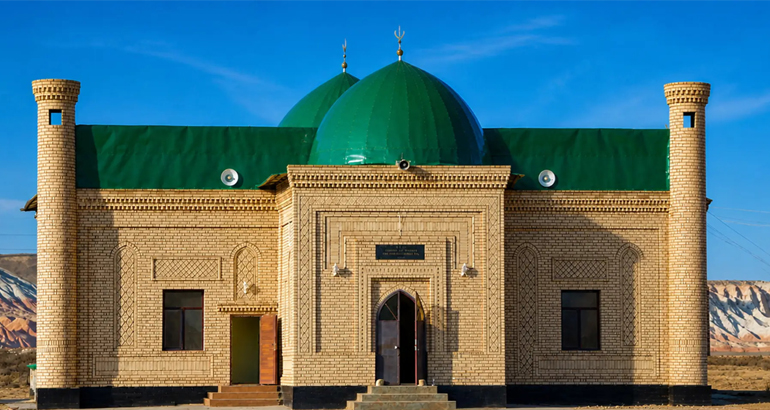
Archaeologists have discovered a new historical site near the Gözli Ata mausoleum in the Balkan province. Based on their research, the scientists concluded that the find may date back to the early Middle Ages and be part of an Oghuz-Turkmen archaeological complex.
Gözel Amangulyeva, a researcher at the Magtymguly Institute of Language, Literature, and National Manuscripts of the Academy of Sciences of Turkmenistan, reported on the discovery in the newspaper Türkmenistan.
Hasan ibn Mukhup Ismail Ata, better known by his pseudonym "Gul-Gedai" and the nickname "Gözli Ata" (Father-Seer, literally "Father of the Sharp Eyes"), was born in 1202 in the ancient homeland of the Oghuz-Turkmen in Turkestan. He died as a martyr in 1292 during the Mongol raids.
Gözli Ata is revered as a prominent figure of the 13th century, an educator, the founder of the Caspian branch of Sufi literature, a follower of the Yasawi Sufi school, and a healer of various ailments (especially spiritual ones). His mausoleum is one of the most visited sites among pilgrims and tourists.
The scientific expedition was organized thanks to a tip from Oregylych Amanov, an experienced educator and resident of the village of Akguy in the Turkmenbashi Etrap.
Mysterious sarcophagus and stone slab
The mausoleum's surroundings include not only extensive cemeteries but also the remains of archaeological complexes—so-called "yurts" (educational institutions, madrassas, and mosques). Here, scientists discovered objects dating back to the early Middle Ages. To study them, the researchers used modern analytical methods.
The complex, in its architecture, the raw materials used, and its landscape layout, resembles monuments of the Oghuz-Turkmen culture.